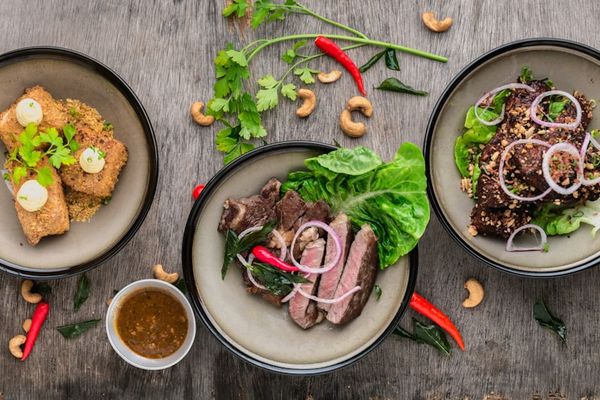
It's 6 PM on a Tuesday. You're hungry, tired from work, and standing in your kitchen asking the age-old question: "What should I eat?" Despite a full refrigerator and dozens of delivery options, you feel completely stuck. If that sounds familiar, you're experiencing food decision fatigue, and you're genuinely not alone.
It really isn't just you
We can see this in our own search data. In a single three-month stretch, this small site turned up in Google more than 300 times for people asking some version of one question, across 67 different phrasings. About one in twenty-five times we appeared in search at all, it was someone trying to decide what to eat.
The phrasings are the telling part. They range from the clinical to the quietly desperate:
- "why is it so hard to decide what to eat"
- "food decision fatigue"
- "can't decide what to eat"
- "food decision paralysis"
These are real searches, typed by real people, usually around dinnertime. So if the nightly "what's for dinner?" feels heavier than it should, that's not a quirk of yours. It's common enough that people quietly ask a search engine for help with it every day.
What is decision fatigue?
Decision fatigue is a well-documented effect: our ability to make good decisions deteriorates the more choices we make through the day. It was studied extensively by social psychologist Roy Baumeister, and it explains why even small decisions feel overwhelming when you're mentally drained.
With food, the effect is especially sharp, for four reasons:
- Frequency: you make food decisions multiple times a day, every day
- Complexity: each one juggles taste, health, cost, convenience and social context at once
- Stakes that feel high: food is tied to comfort, mood and identity, so it rarely feels trivial
- Abundance: modern life offers an overwhelming number of options
By dinner, after a day of work decisions, your brain simply doesn't have the bandwidth to weigh all of that, which is why "what should we eat?" can feel impossible at exactly the moment it should be easy.
The paradox of choice
Psychologist Barry Schwartz's work on the "paradox of choice" maps almost perfectly onto food. Having options is good, but too many options tends to produce:
- Analysis paralysis: endless comparing without deciding
- Decision avoidance: defaulting to the same few meals, or giving up and ordering in
- Post-decision regret: wondering whether the other option would have been better
- Lower satisfaction: even a good choice feels worse when you're aware of everything you didn't pick
A delivery app that opens with 200 restaurants isn't helping you decide. It's handing you the hardest part of the problem and calling it convenience.
Why food decisions hit harder than most
- Emotional weight. Food isn't just fuel; it's comfort, memory and identity. Choosing a meal is also choosing how you want to feel.
- Competing goals. You want healthy and comforting, quick and satisfying, cheap and a little special. Those tensions make every choice slower.
- Information overload. Nutrition labels, reviews, diet advice, endless recipes, more input than any decision needs.
- A daily drumbeat. Clothes you can wear on autopilot. Dinner comes back around every single night.
That last point is why people like Barack Obama and Mark Zuckerberg famously cut trivial decisions (like what to wear) out of their day. The same logic applies to food: the fewer low-value decisions you carry, the more mental energy you keep for the ones that matter.
How to beat food decision fatigue
The good news: this is very manageable once you stop treating it as a willpower problem and start treating it as a decision-design problem.
1. Make fewer decisions
- Batch them. Plan a few meals when your energy is fresh, not at 6 PM. (Here's how to plan for two without fighting about it.)
- Keep defaults. A go-to breakfast, a default lunch, two or three easy dinners. Defaults are decisions you only make once.
- Theme nights. Taco Tuesday and pizza Friday exist because narrowing the field is a relief, not a limitation.
2. Time it right
- Decide before you're starving. A hungry brain makes worse calls; choose while you can still think.
- Decide when fresh. Morning-you is better at this than end-of-day-you.
3. Shrink the question itself
This is the big one. "What should I eat?" is an open question with infinite answers, the hardest kind to face when you're tired. The trick is to turn it into a series of tiny yes-or-no calls instead.
Show me one dish. Yes or no? Next. That's a reaction, not a research project, and it's exactly how recipe-swiping apps attack the problem.
Where a swipe fits in
Full disclosure: this is our area, SomeYum is our app. But it's also the cleanest example of "shrink the question" in practice, which is why it's worth explaining here.
Instead of a search box or a 200-item list, SomeYum shows you one dish at a time. Swipe right for "yes, tonight", left to pass. After a few swipes it has learned enough about your taste to stop showing you things you'd never cook, and when you say yes, dinner is decided, full recipe included. No account, no setup, you just start.
It won't replace meal planning if that's what you need (we compared the best AI meal planning apps for that). But for the specific 6 PM problem, "I don't know what I want", turning an open question into a handful of yes/no swipes is about the most direct fix there is.
The point isn't fewer choices, it's easier ones
Food decision fatigue is real, and it quietly taxes a lot of people every single day, the search data alone makes that plain. But the goal isn't to strip the joy out of eating or eliminate choice. It's to spend your limited daily decision-making on the things that deserve it, and make "what's for dinner?" effortless again.
Start with one meal. Build a couple of defaults. And when you're stuck, stop scrolling and start swiping, you'll be eating before you'd otherwise have finished deciding.
Make tonight's choice an easy one
You don't need more willpower, you need fewer decisions. SomeYum turns "what should we eat?" into a few quick swipes, one dish at a time, yes or no, until dinner's decided.
Frequently asked questions
Why is it so hard to decide what to eat?
Because it's a decision you make every single day, often under time pressure, weighing taste, health, cost and convenience at once, and usually when your mental energy is already spent. Psychologists call that drain decision fatigue. It isn't a personal failing; it's the predictable result of too many choices at the worst time of day.
What is food decision fatigue?
It's decision fatigue applied to eating: the more choices you make through the day, the worse your brain gets at making the next one, so by dinner even 'what do we eat?' can feel impossible. The fix isn't more willpower, it's fewer and easier decisions.
How do I stop overthinking what to eat?
Shrink the decision. Swap the open question ('what should I eat?') for a series of quick yes-or-no calls, keep a few default meals, and decide before you're starving. Tools that show one option at a time, instead of a 200-item list, turn the choice into a fast reaction instead of a research project.
Is decision fatigue real?
Yes. It comes out of research by psychologist Roy Baumeister and others showing that decision quality declines as we make more choices. Barry Schwartz's 'paradox of choice' adds that more options can leave us slower to choose and less satisfied once we do, which is exactly what a fridge full of possibilities does to you at 6 PM.